















Notizie da Coop Bénimellal-KHénifra
Best Thread Color For Invisible Repairs – Sewing


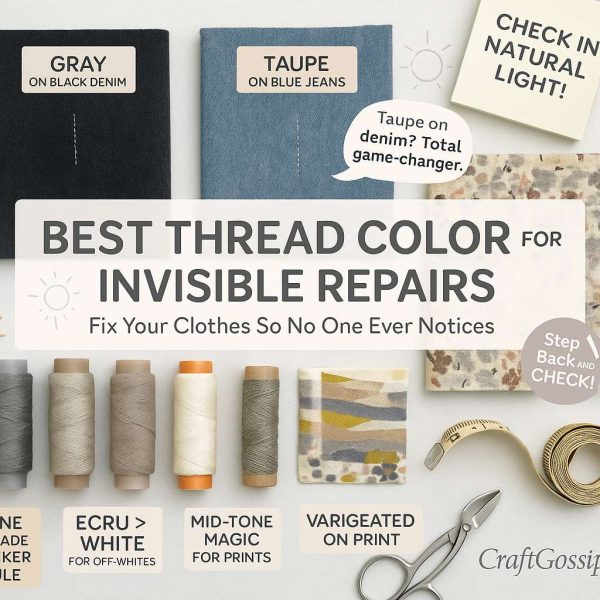
There’s a special kind of pride in making a repair so perfect no one can spot it—not even you, if you squint. After years of trial and (very visible) error with fabric mending, I’ve finally cracked the code on how to choose the best thread color for invisible repairs. And yes, there is a method to the magic.
Whether you’re patching a tear in your favorite jeans, darning a hole in a well-loved coat, or reattaching a button on a delicate blouse, the right thread color can mean the difference between “seamless” and “yikes, what happened there?”
My Color Matching Epiphany
The real game-changer happened when I realized the lighting I was using was sabotaging me. I had spent so much time in front of lamps, matching thread to fabric under yellow bulbs or LED spotlights, only to find out in daylight that my “perfect” match stuck out like a sore thumb.
Now, I always do my thread matching in three key ways:
- By a sunny window: Natural light shows true color tones, especially for blues, grays, and neutrals.
- Under the room’s actual lighting: Because that’s how the garment will usually be seen.
- From three feet away: This is the average viewing distance. If it blends from here, it’ll probably pass the test.
This triple-check system has saved me from so many mismatched seams and awkward “fix” lines. Trust me—natural lighting is the unsung hero of invisible mending.
Why “Perfect” Matches Often Fail
You’d think matching black thread to black fabric would be foolproof, right? Wrong. I learned the hard way when I repaired a vintage black wool coat using brand new black thread. It looked fine—until it rained. Suddenly, the repair line stood out like neon because:
- New thread doesn’t match fabric wear. Even black fades, and new thread is almost always deeper or glossier.
- Thread and fabric age differently. Fabrics wear down over time, but thread stays fresh unless exposed to the same wear.
- Stitches create shadows. Especially on textured fabrics, even a perfect color match can look different because the stitching line catches the light differently.
My Go-To Solutions for Choosing the Right Thread Color
After lots of experimentation, I’ve developed a few rules and go-to thread shades that never let me down.
The “One Shade Darker” Rule
When repairing solid-colored fabric, always go one shade darker than the fabric, not lighter. Lighter thread tends to stand out, while darker shades sink into the fibers and become less noticeable after a few washes.
My test: If I’m stuck between two threads, the darker one usually becomes invisible once sewn in.
Secret Weapons in My Thread Box
If you peek inside my thread stash, you’ll find a few colors that work across a surprising range of repairs:
- Gray: My holy grail for mending faded black denim. It mimics the lived-in look and doesn’t scream “new thread alert.”
- Ecru: A much better option than stark white when repairing off-white garments or linens.
- Variegated thread: Perfect for printed or patterned fabrics. The shifting tones help it blend without looking patchy.
Repairing Multi-Color & Printed Fabrics
Prints and patterns used to intimidate me—until I stopped trying to match everything. Here’s what works now:
- Identify the dominant color in the print.
- Choose a thread that matches the mid-tone — not the lightest, not the darkest. Mid-tones blend in far better than extremes.
- Consider dual-threading your needle. For bold prints, I sometimes use two similar threads in the needle to blend tones more naturally.
It sounds complicated, but it takes just a few minutes once you start practicing.
My Favorite Invisible Repair Trick
Ready for the trick that feels like cheating?
Taupe on blue jeans.
I know—it doesn’t make sense at first. But taupe has neutral undertones that cancel out the high-contrast blue. I’ve repaired over 20 pairs of jeans this way, and to this day, no one—not even other sewists—has ever spotted the seams.
It’s one of those weird color tricks that just works. (And yes, I keep a dedicated spool just for this.)
Your Turn to Try It
Next time you’re repairing a tear, a rip, or a loose hem, give the one-shade-darker method a go. Test your thread colors in natural light, take a step back, and look at the piece from a real-life distance.
These small tweaks will level up your mending game and make your repairs practically invisible—even on your most beloved, well-worn pieces.
Have your own secret repair thread tip? I’d love to hear what color combos work best for your projects. Drop them in the comments below or tag me on social!
Color Matching Rules
Solid Fabrics:
-
Choose one shade darker than the fabric
-
Avoid perfect matches—they rarely blend once stitched
-
Wash test if unsure: darker thread blends more after laundering
Faded Black or Dark Denim:
Off-White or Natural Fabrics:
Printed Fabrics:
-
Identify the dominant color
-
Match to the mid-tone, not the lightest or darkest
-
For bold prints: try variegated thread or double-threading with two blended colors
Go-To Thread Colors
| Fabric Type | Recommended Thread |
|---|---|
| Faded black denim | Gray |
| Blue denim | Taupe |
| Off-white cotton/linen | Ecru |
| Floral or multicolor print | Variegated or mid-tone |
| Bold prints | Dual-thread blend |
